
St Robert Bellarmine Catholic Primary School
Mental Health and Wellbeing
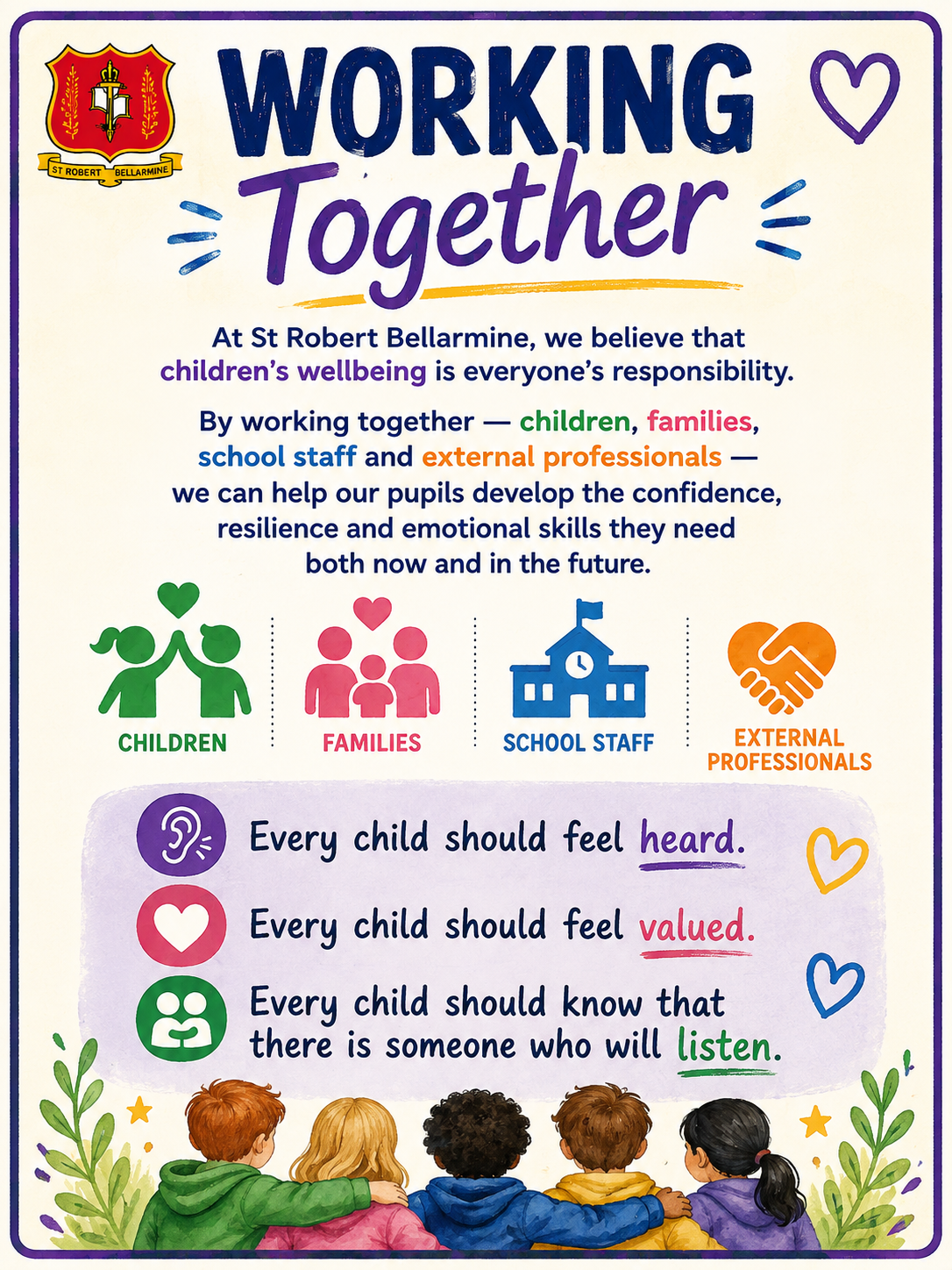
Our Approach to Wellbeing and Mental Health
Wellbeing is an important part of everyday life at St Robert Bellarmine.
Through our curriculum, assemblies, pastoral support and wider school life, we help children to:
-
recognise and talk about their emotions
-
develop confidence and self-esteem
-
build positive and healthy relationships
-
develop resilience and strategies for dealing with challenges
-
understand how to look after their physical and mental wellbeing
-
recognise when they or someone else may need help
-
know who they can talk to when they have a worry.
We want all our children to feel that they belong, are valued and have trusted adults who will listen to them.
How We Support Children in School
Children may need different levels of support at different times in their lives.
Our staff know our children well and are available to listen and provide help when children experience worries or difficulties.
Depending on the individual needs of the child, support may include:
-
opportunities to talk to a trusted adult
-
pastoral and emotional wellbeing support
-
help with friendships and relationships
-
strategies for understanding and managing emotions
-
support with worries and anxiety
-
support during periods of change or transition
-
working closely with parents and carers
-
working with appropriate external professionals and services where additional support may be beneficial.
Our aim is always to work in partnership with children and their families to ensure that pupils feel safe, supported and ready to learn.
Mental Health Support Team (MHST)
We are pleased to work in partnership with our local Mental Health Support Team (MHST).
The Mental Health Support Team works with schools to support children and young people in achieving positive mental health and emotional wellbeing.
The team can provide support with a range of difficulties that children may experience, including:
-
anxiety and worries
-
managing emotions
-
friendship difficulties
-
low mood
-
confidence and self-esteem
-
changes or challenges that may be affecting a child’s wellbeing.
The MHST also works alongside school staff and families to help children develop strategies that support their emotional wellbeing.
If you feel that your child may benefit from additional support, please contact school so that we can discuss your concerns and the support that may be available.
When Should I Ask for Help?
It is completely normal for children to experience different emotions, worries and challenges as they grow.
Sometimes, however, a child may need some additional support.
You may wish to speak to us if you notice that your child:
-
appears worried, anxious or unhappy for a prolonged period
-
has become unusually quiet or withdrawn
-
is experiencing friendship difficulties
-
is finding it difficult to manage their emotions
-
has experienced a significant change, loss or difficult event
-
is having difficulties with sleep
-
is reluctant to attend school
-
is experiencing difficulties that are affecting their learning or everyday life
-
tells you that they are struggling or need help.
You know your child best.
If something is concerning you, please contact us. You do not need to wait until a problem becomes serious before asking for support.
Who Can Children Talk To?
We encourage children to talk about their feelings and to tell someone whenever something is worrying them.
In school, children can speak to:
-
their class teacher
-
their teaching assistant
-
the Headteacher
-
another teacher or member of staff
-
any other trusted adult in school.
Supporting Wellbeing at St Robert Bellarmine
Supporting positive mental health is about much more than responding when something goes wrong.
We provide children with opportunities throughout their time at St Robert Bellarmine to develop the skills, relationships and experiences that contribute to positive wellbeing.
This includes:
-
PSHE and Relationships Education
-
opportunities for prayer and reflection
-
PE, sport and physical activity
-
developing positive friendships
-
pupil voice and leadership opportunities
-
anti-bullying education
-
online safety education
-
opportunities to talk about feelings and emotions
-
transition support
-
celebrating achievements
-
promoting kindness, respect and inclusion
-
providing opportunities for children to feel part of our school community.
We want children to leave St Robert Bellarmine with the confidence and resilience they need to manage challenges, build positive relationships and seek help when they need it.
Support for Parents and Carers
Parents and carers play an important role in supporting children's emotional wellbeing.
Regular conversations can help children understand that all emotions are normal and that they can talk about things that are worrying them.
You can support your child by:
-
making time to talk and listen
-
acknowledging their feelings
-
encouraging healthy sleep routines
-
encouraging physical activity and time outdoors
-
helping them maintain positive friendships
-
establishing healthy routines
-
supporting a healthy balance between online and offline activities
-
reassuring them that asking for help is a positive thing
-
contacting school if you have concerns.
You do not have to manage concerns alone. Please speak to us if you think your child needs additional support.
If You Are Worried About a Child
If you are concerned about your child's mental health or emotional wellbeing, please contact school. We can listen to your concerns, discuss what your child may be experiencing and consider what support may be appropriate.
If you believe a child is in immediate danger or there is an immediate risk to their safety, please seek urgent professional help through the appropriate emergency services.